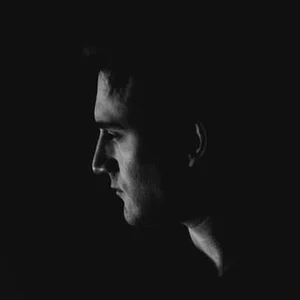
EP08 - David Messina
ULTIMATE SPIDER-MAN SPECIAL - 2026
Hi again David, thanks so much for coming back and doing this Ultimate Spider-Man Special. I want to start by saying that you’ve been one of the kindest and most generous artists I've ever had not just on my blog, but also the pleasure of getting to know.
Last time you told me how you became part of the USM team, so now I want to go a step further and ask what’s your process?
My process is pretty much always the same: I gather the references I need to build my vision for the page—cityscapes, clothing, graphic design elements (often from Japanese graphic design, which is a huge passion of mine)—and then I start building the page by following a very specific musical rhythm, which I find in the playlists I create, each one themed around the project I’m working on.
From there, I move on to the layout, then the pencil sketches of the characters, then the backgrounds, and finally the inking of the characters again.
The character of Gwen Stacy first appears in Ultimate Spider-Man #4 which is also your first issue in the series, did you design her or was it something (co-penciler) Marco Checchetto already finalized with (writer) Jonathan Hickman?
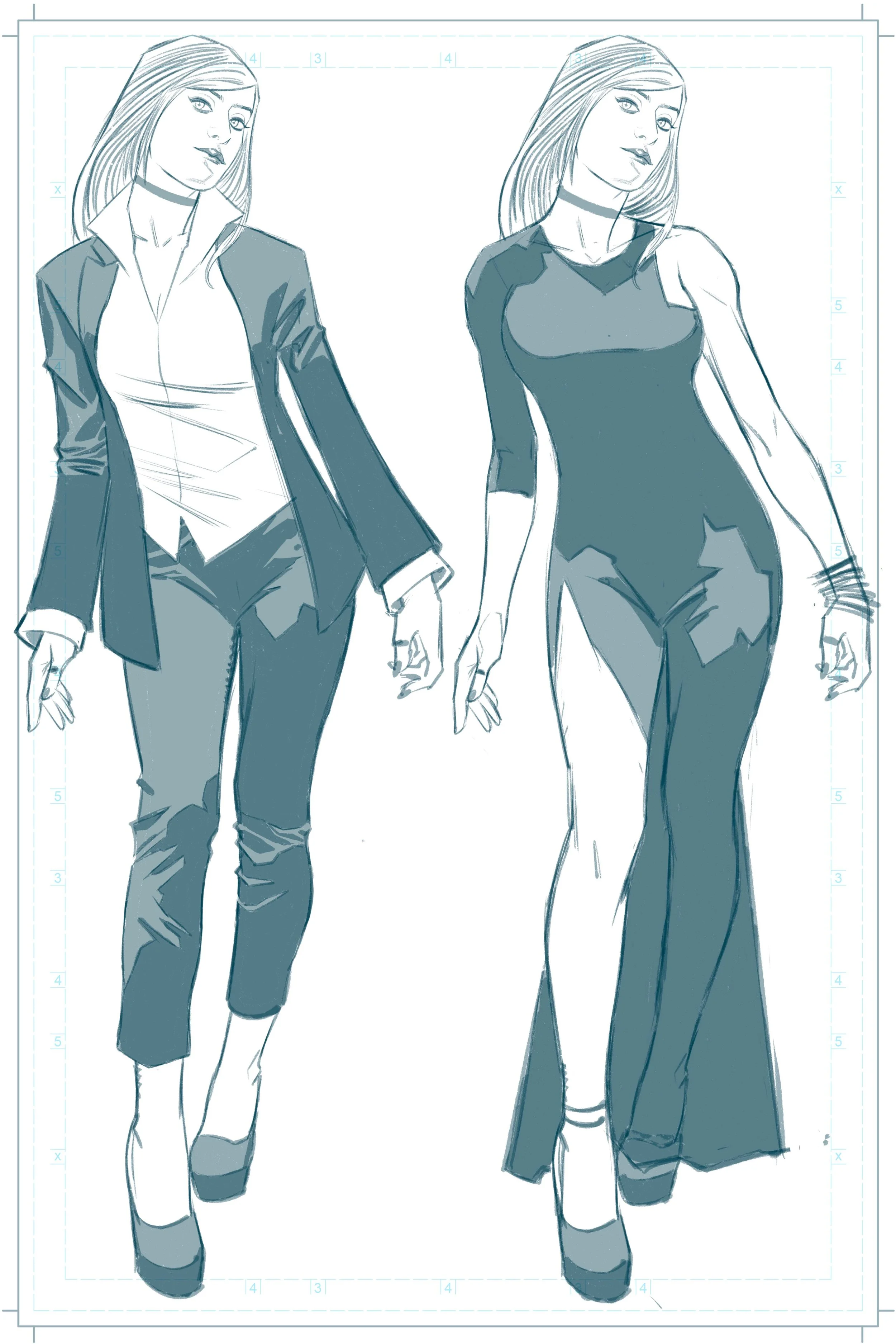
Unfortunately, my contribution to the character of Gwen was limited. Marco, following Hickman’s direction, did a splendid job creating a character with a strong personality; my contribution was limited to the dress design, which I developed based on high fashion, drawing inspiration in particular from the designs of Valentino to capture her sophisticated and elegant style.
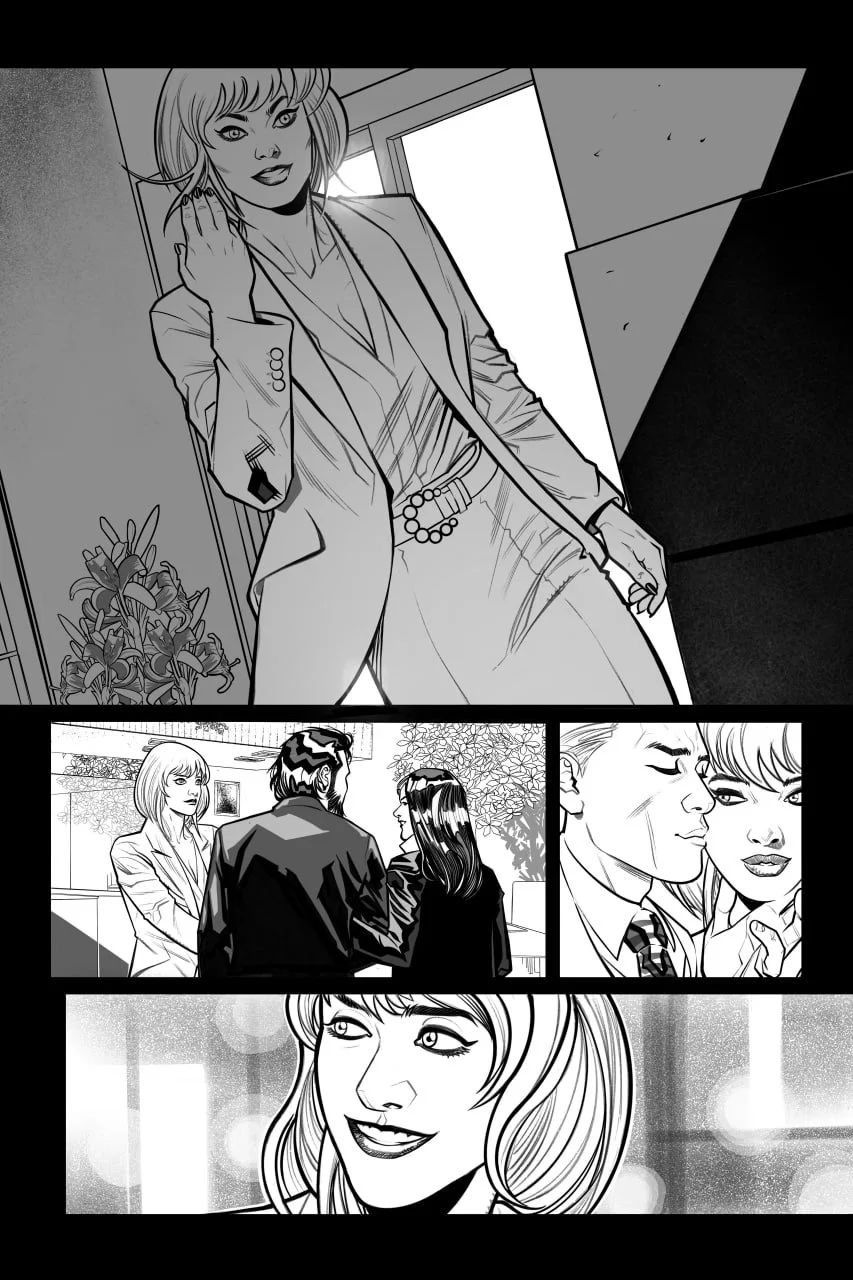
Just a fun observation, but in the following issue Harry & Gwen speak to Bill who was Norman's personal attorney, about Harry’s inheritance of his father’s assets. Couldn’t help but notice that the character of Bill bears a striking resemblance to legendary Spider-Man artist John Romita Sr. Was that a deliberate choice?
No, it’s no coincidence—I was struck by the first line on that page, spoken by Harry to Bill: “I’m very grateful to you for everything you’ve done for my family” and the image of Jr. and Sr. immediately came to mind. I really love Ditko’s Spider-Man, but the one I grew up with (I only caught up on Ditko’s issues later) was the Spider-Man by Lee/Thomas/ Romita Sr./Kane (to be exact, the first issue I read was “The Night Gwen Stacy Died” and it’s funny to think that my very first Spider-Man comic was the one introducing Ultimate Gwen Stacy.
So he’s the one I wanted to pay homage to most of all because he defined my Spider-Man, and it was something I drew straight off the cuff on the page!
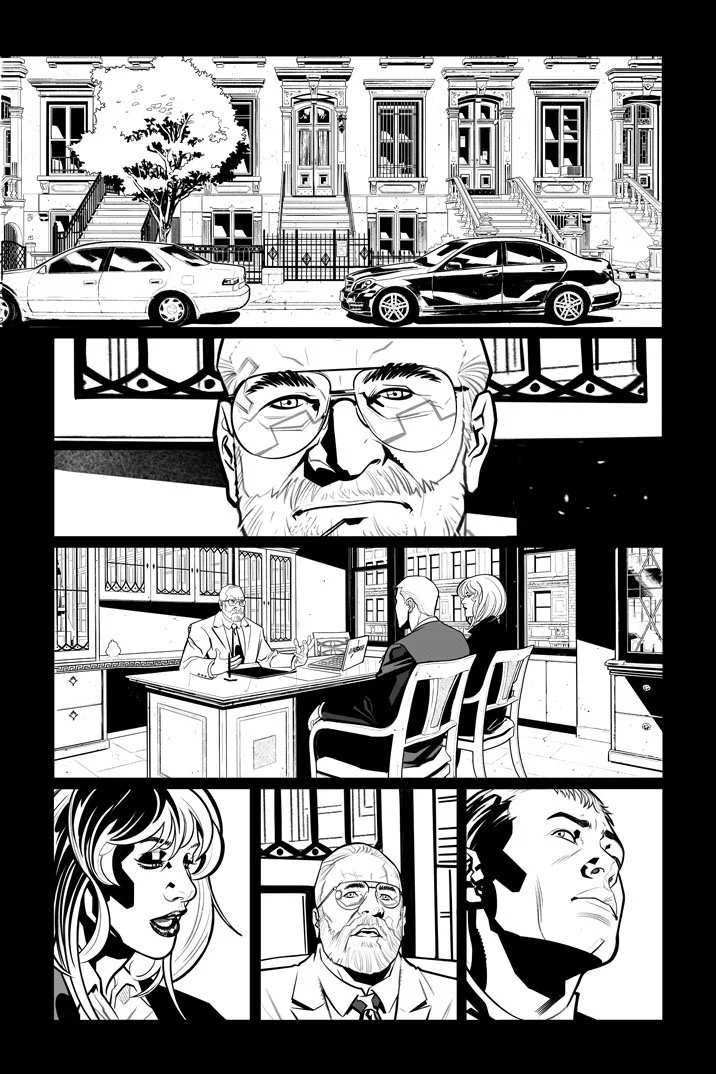
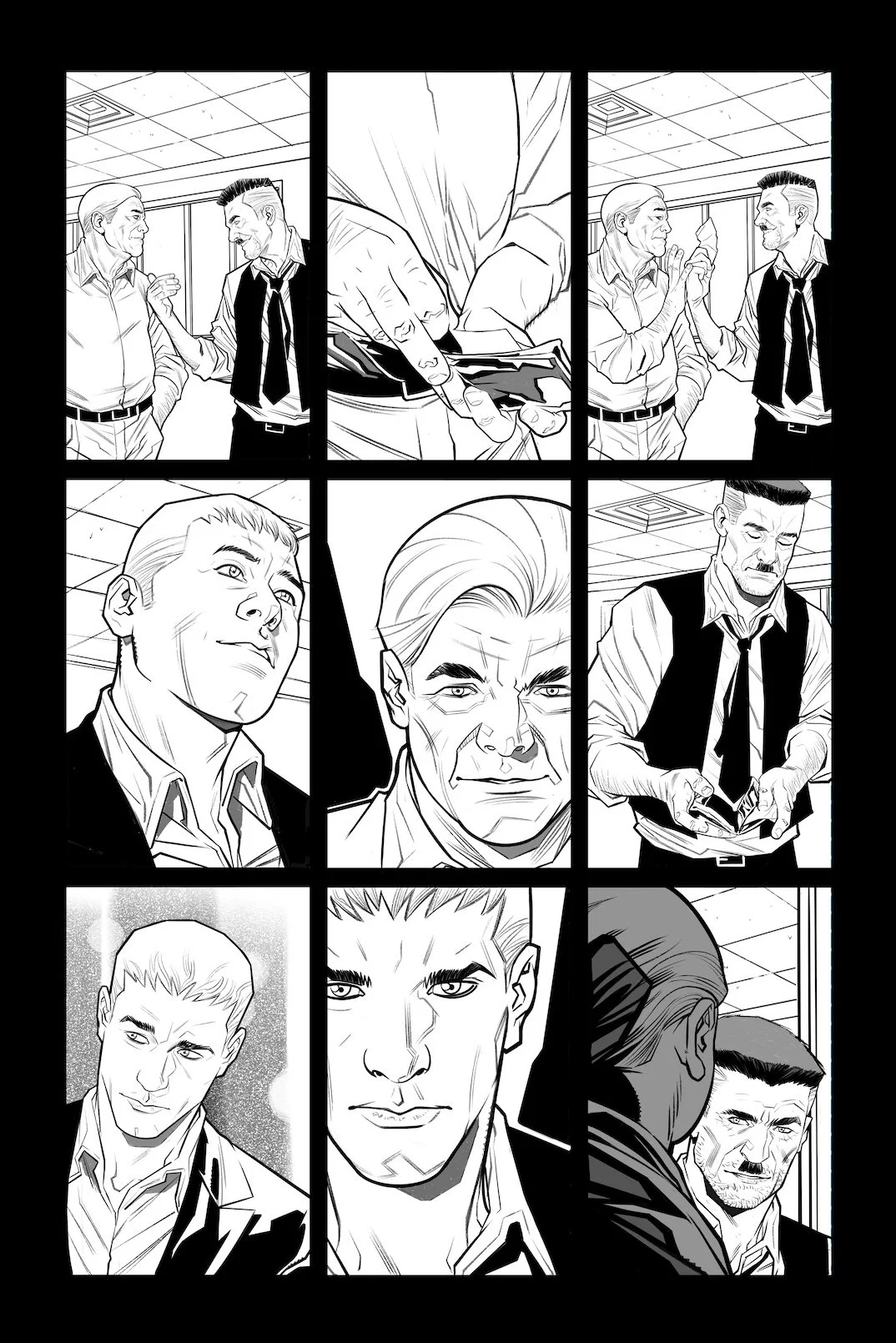
Your next issues are #10 & #11 which are among my favorites from the series. First we have a noir-ish detective story featuring Ben Parker & J.Jonah Jameson on the tails of The Kingpin. How did you approach it artistically here and across your overall run? And since this issue relies less on big action sequences, what were the unique challenges?
Even though the story was essentially a noir, my point of reference for the interaction between JJJ and Ben Parker has always been Jack Lemmon and Walter Matthau. In my mind, the two of them spoke with those voices and had that same chemistry. The rest of the story, even in its most dramatic moments, was based on that feeling—that impression—as if we were watching a sort of journalistic spy story performed by two great comic actors set within a world as dark as the Ultimate Universe!
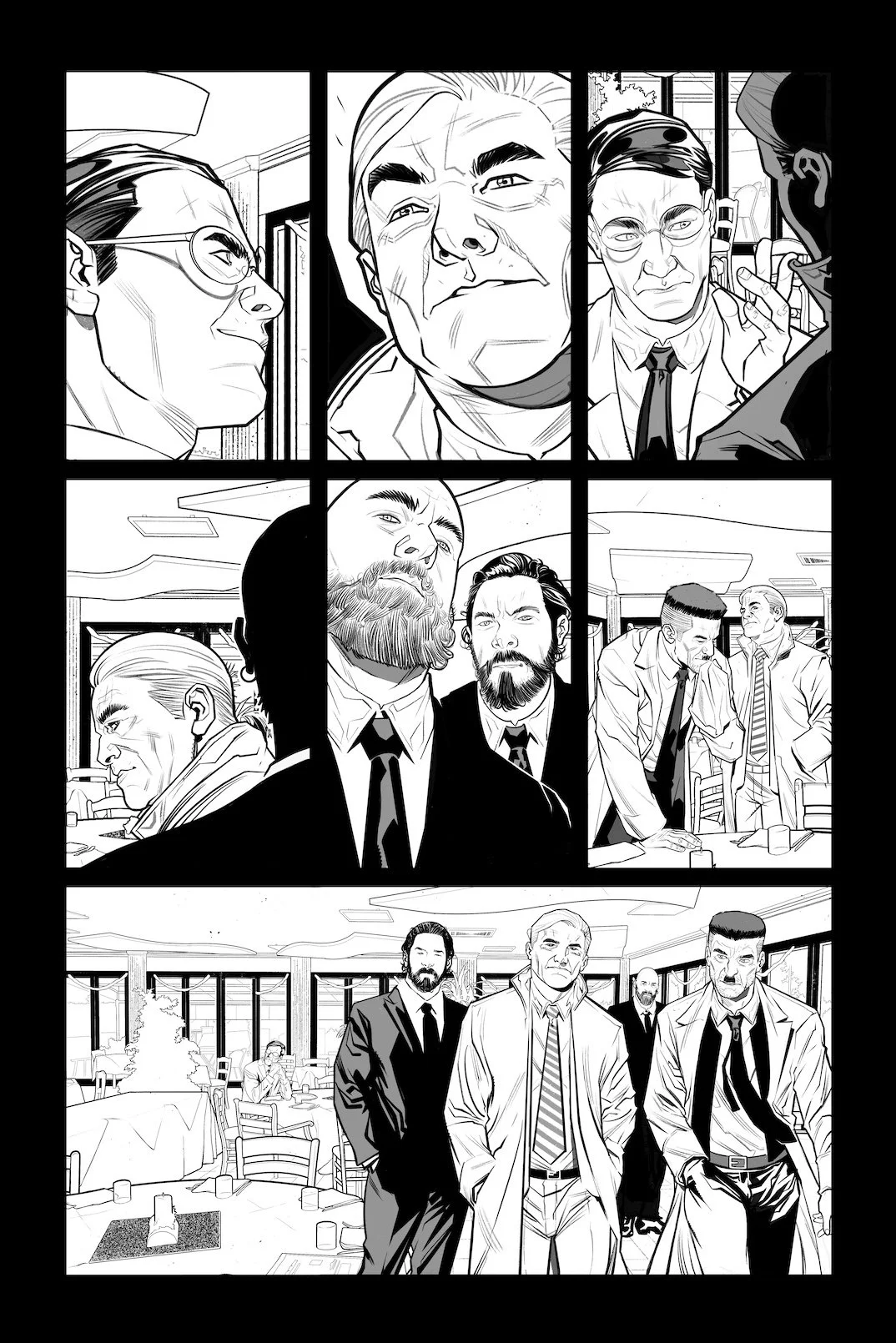
The real challenge, then, wasn't so much the lack of action as the 9-panel grid, which limits the choice of shots—especially for someone like me who was trying to use wide, almost cinematic shots!
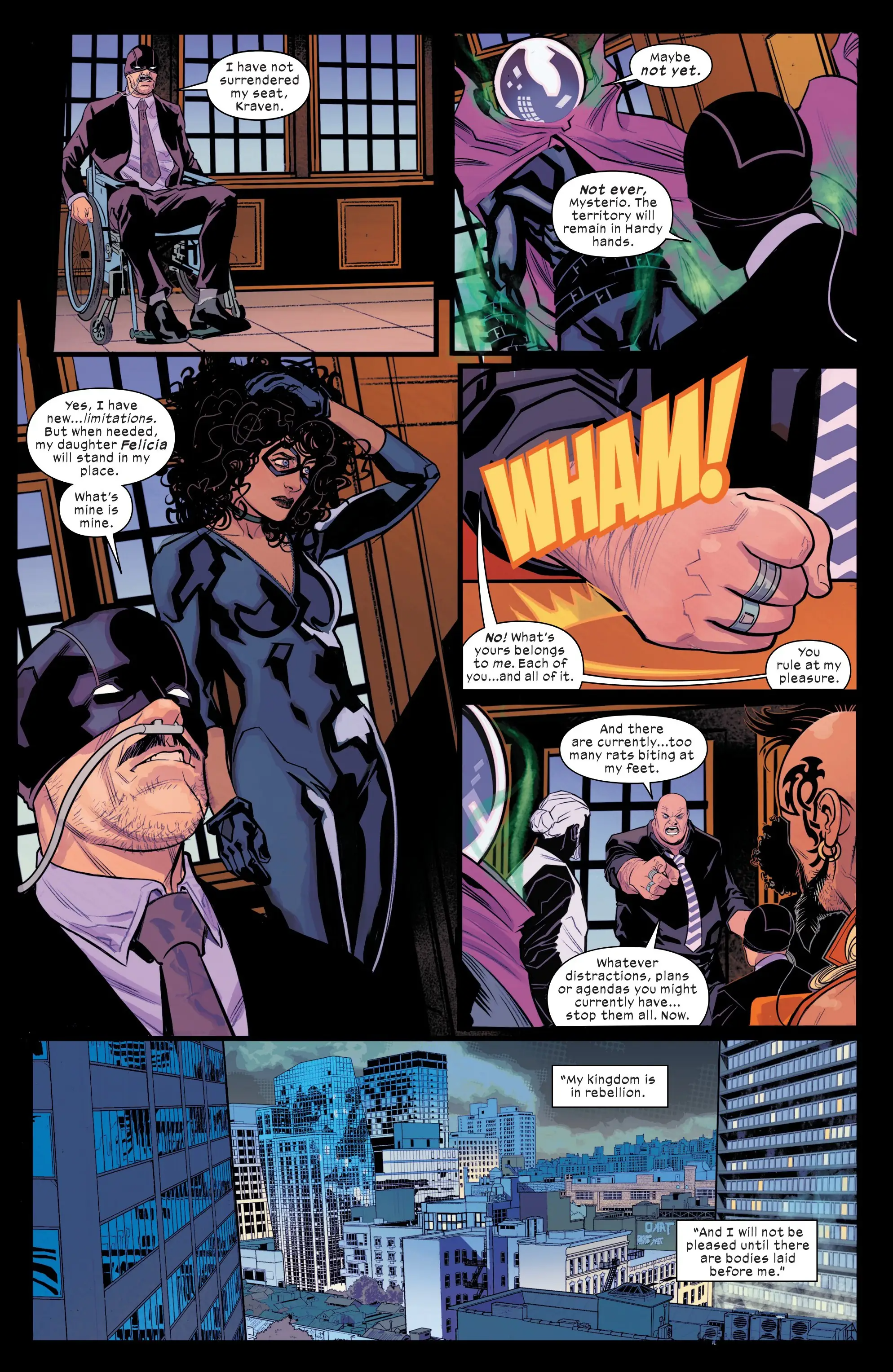
The next one features the first appearance of Felicia Hardy’s Black Cat, like with Gwen, you were the first to introduce her in the book. Was there already a pre-approved concept?
Once again, it was all Marco’s work, but once again—fortunately for me, since I had so much fun drawing her—Marco created a character that was right up my alley. Besides being a dear friend, Marco and I share the same passion for authors, movies, and actors and actresses, and that kind of beauty resonated with both of us. It was also important to us to make her someone readers would fall in love with, thereby identifying with Richard Parker!
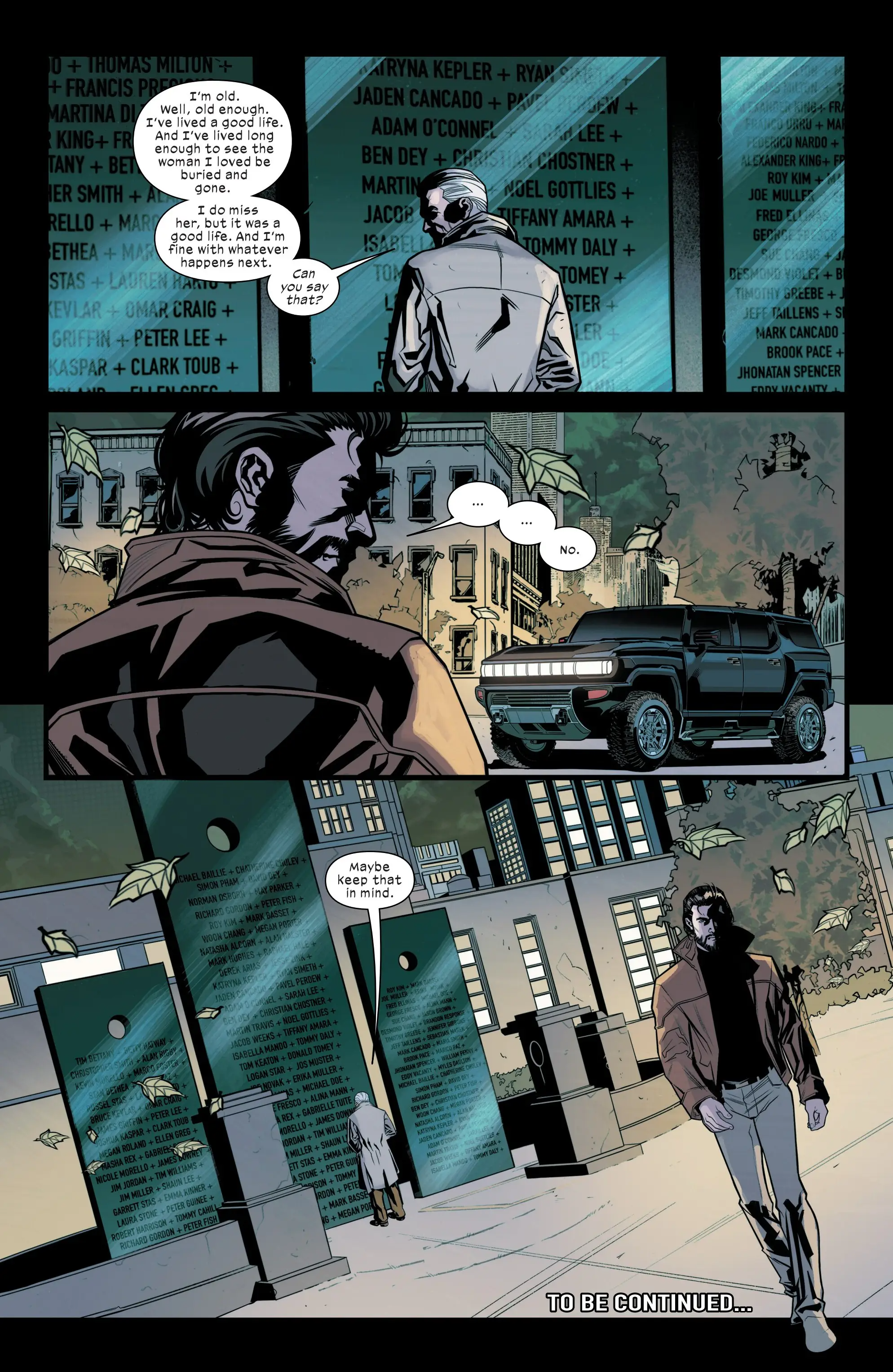
This issue has one of the best moments I’ve read in a long time. “I’m old. Well old enough. I’ve lived a good life. And I’ve lived long enough to see the woman I loved buried and gone. I do miss her, but it was a good life. And I’m fine with whatever happens next. Can you say that?” asks Ben to which Peter replies “No”. Ben then tells Peter “Maybe keep that in mind.” Gets me every time. To circle back a bit, how was it reading this issue's script in particular and how did you approach it?
It was one of my favorite scenes, too. The tension in that dialogue reminded me of the beautiful confrontation between May and Peter in *Homecoming* by Straczynski and JR Jr.
I tried to give it the right gravitas, especially in light of what was going to happen next—something Marco and I were already aware of.
What I find exciting about these versions is that on one hand you seem to have a mixture of Tobey Maguire / Andrew Garfield in Peter Parker, but for Richard and Felicia, who are the new generation, either because of the youthful energy or paying homage to this era of Spider-Man movies, feels like a Tom Holland and Zendaya tribute. Was that conscious or just naturally seems to be a fun connection?
As for Peter, my main source of inspiration—and I think Marco’s as well—was the Spider-Man stories by J.R. Sr., J.R. Jr., and Gil Kane, the very ones that inspired Raimi and Maguire’s Spider-Man. I think that’s where a certain similarity came from, whereas for Richard and Felicia, the idea was specifically to evoke a power couple like Tom Holland and Zendaya—including, to some extent, her much more confident and self-assured demeanor compared to his, as he often comes across in interviews or on the red carpet as genuinely in love with and captivated by her.
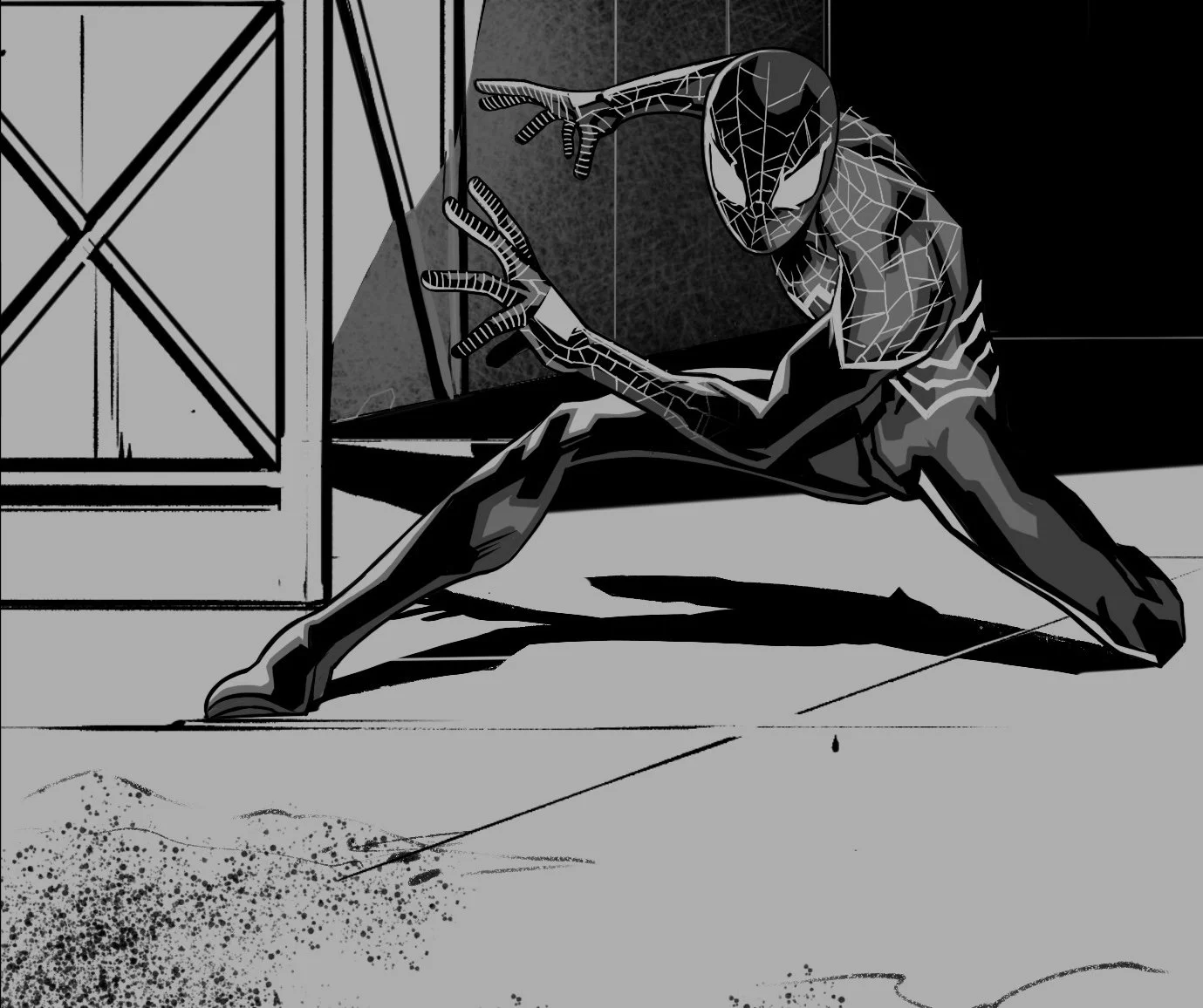
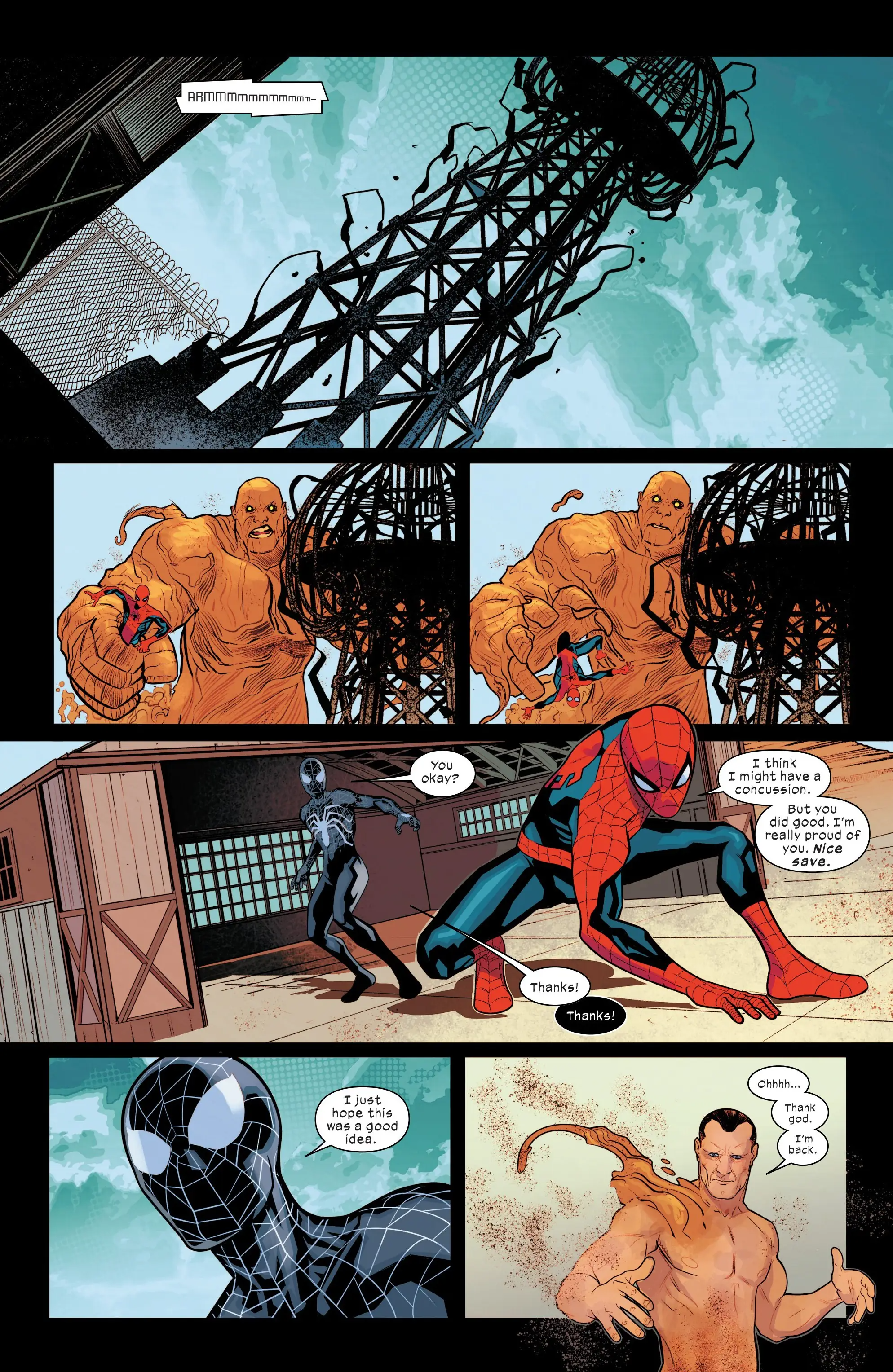
Besides also being the one to introduce Ultimate Sandman in #15 you do seem to have a lot of enjoyment doing the Peter & Richard dynamic. How do you approach these moments? What are the best parts of smaller scale beats in the story for you as an artist and where can you take liberties to bring your own flavor?
For that issue, my inspiration was clearly the dynamic between Peter and Miles in *Into the Spider-Verse*—so much so that, for the framing, I used my Hot Toys Spider-Man (Maguire) and Miles figures from the animated feature film as references for the proportions. Jonathan gave me a lot of freedom in handling the sequence, and my love for Kaiju movies did the rest—I played around with Sandman’s proportions and had fun depicting that clash.
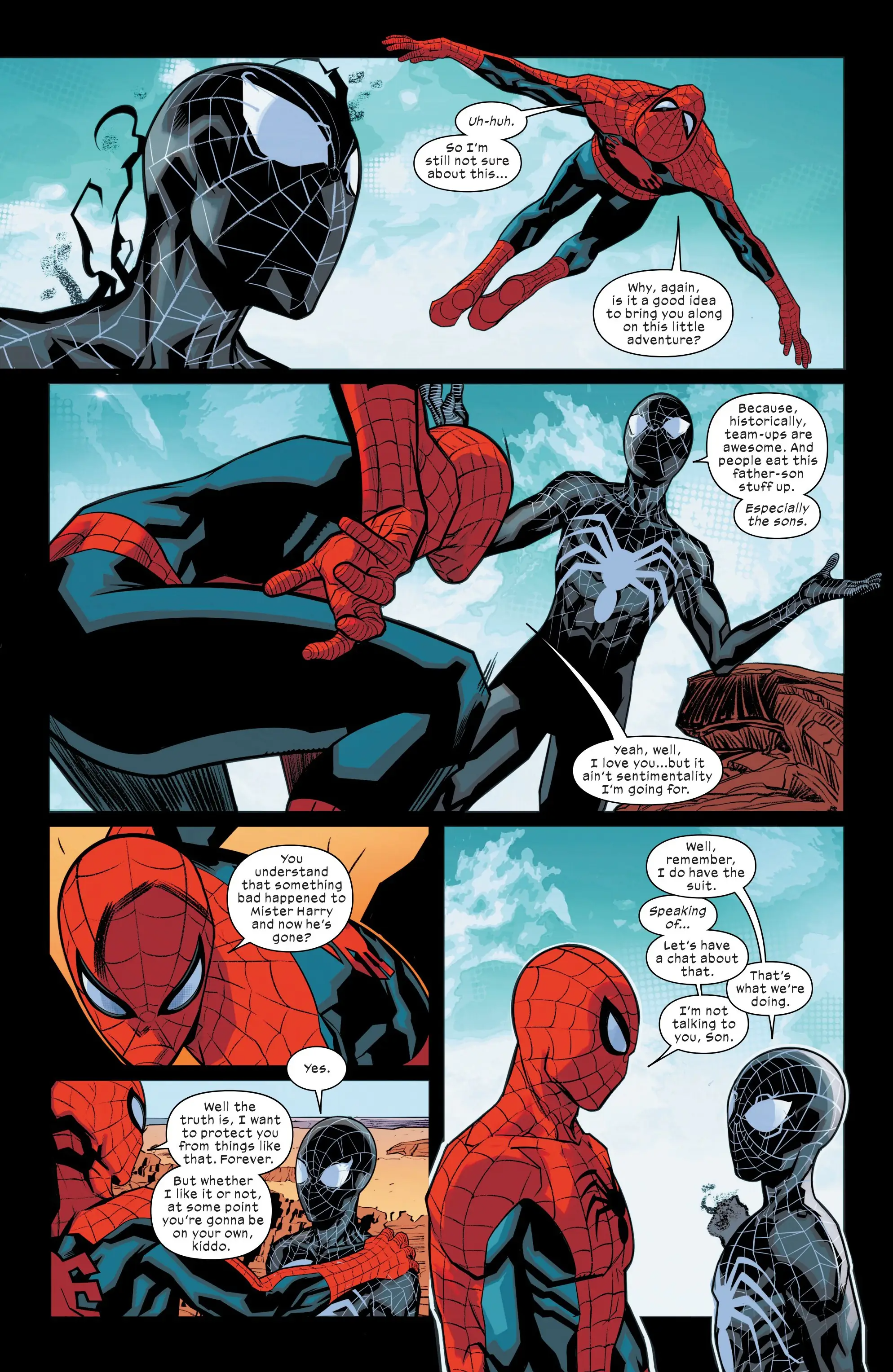
I love how it has vibes of Raimi’s Spider-Man 3. Flint Marko a misunderstood character, heartfelt moment with him in the end, black suit Spider-Man.
Yes, once again there were some vibes from Raimi/Maguire’s Spider-Man, and I think that’s mainly because the three of us grew up with that Spider-Man and still love him so much!
Leading up to the conclusion of the series, what aspects of the book surprised you regarding the story? What was your biggest WOW moment from the finale and the most challenging part in your overall run?
I don't really know how to answer that question, partly because maybe the biggest “WOW” moment in the ending for me was simply that there was an ending at all!
There are so many, many stories I would have loved to draw and tell about the character and everyone around him.
I don’t think there’s a single character I didn’t love drawing, nor a single moment when, as a reader of those scripts, I wasn’t captivated by their lives even before visualizing them and bringing them to life on paper!
At the beginning it was Marco and you switching between issues, how was that process for you as an artist challenging or freeing? How much communication did you have with each other and/or Jonathan?
As for how we took turns, it was all handled by Hickman and our editors, who didn’t just want us to take turns but also to follow certain narrative threads—precisely so that we could have even more freedom in certain respects.
Most of the communication took place with Wil and Michelle, who were truly extraordinary!
In these final issues you both do pages, was that because of time constraints or reworks in the script that necessitated this pace? What was the flow for you to make sure everything was in sync with what was being done?
The page layout in the last two issues was mainly due to what I mentioned above regarding the storylines that both Marco and I were following, and in the latest issue, there were a few extra pages that I drew because Marco wasn’t feeling well, so I took over those pages.
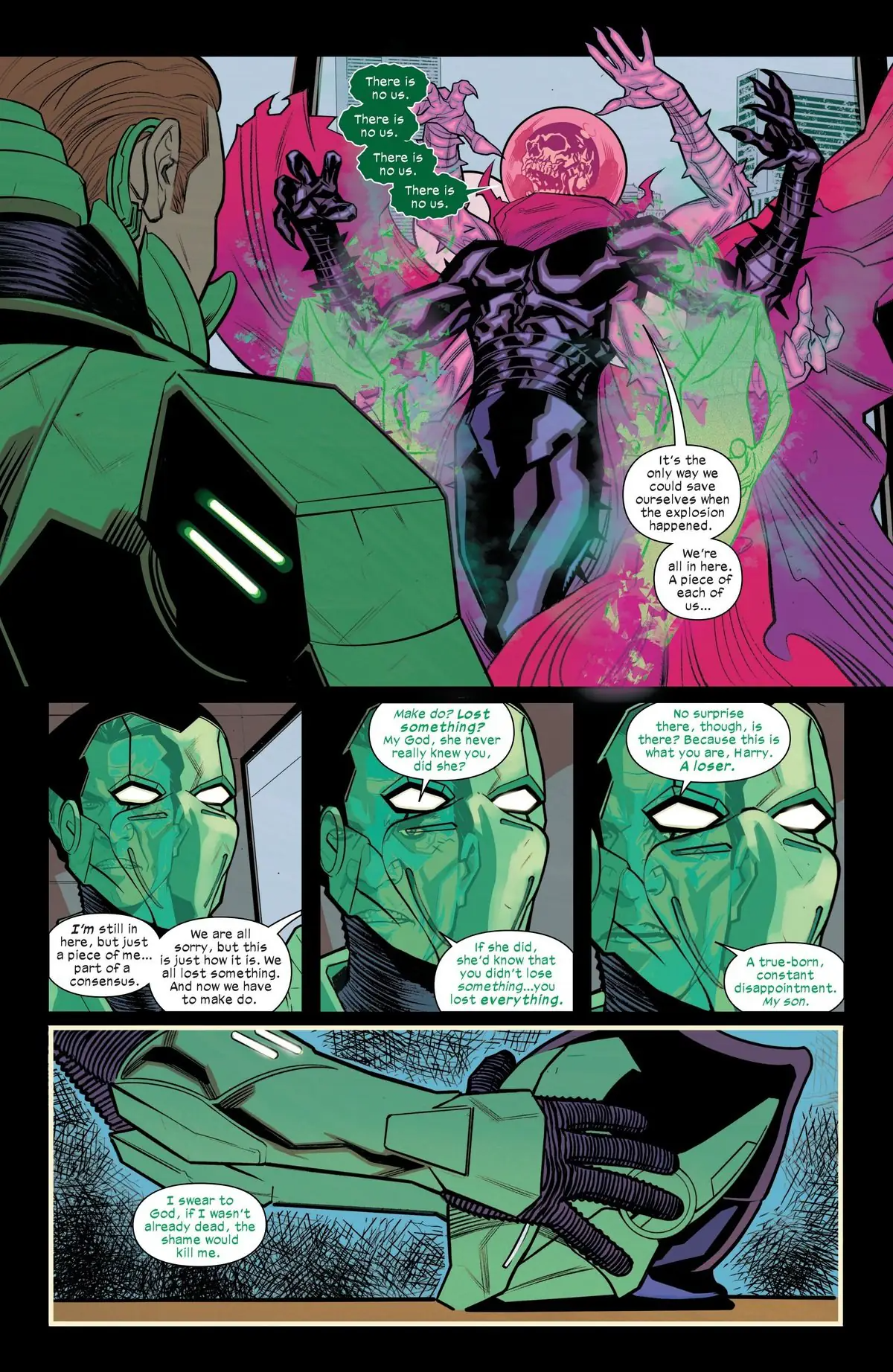
All in all, keeping everything in sync was simple because Marco and I we were in touch daily, exchanging advice, pages, and anything else that might be useful to us—always under the watchful eye of Wil and Michelle, who were kept up to date on the entire creative and communication process!
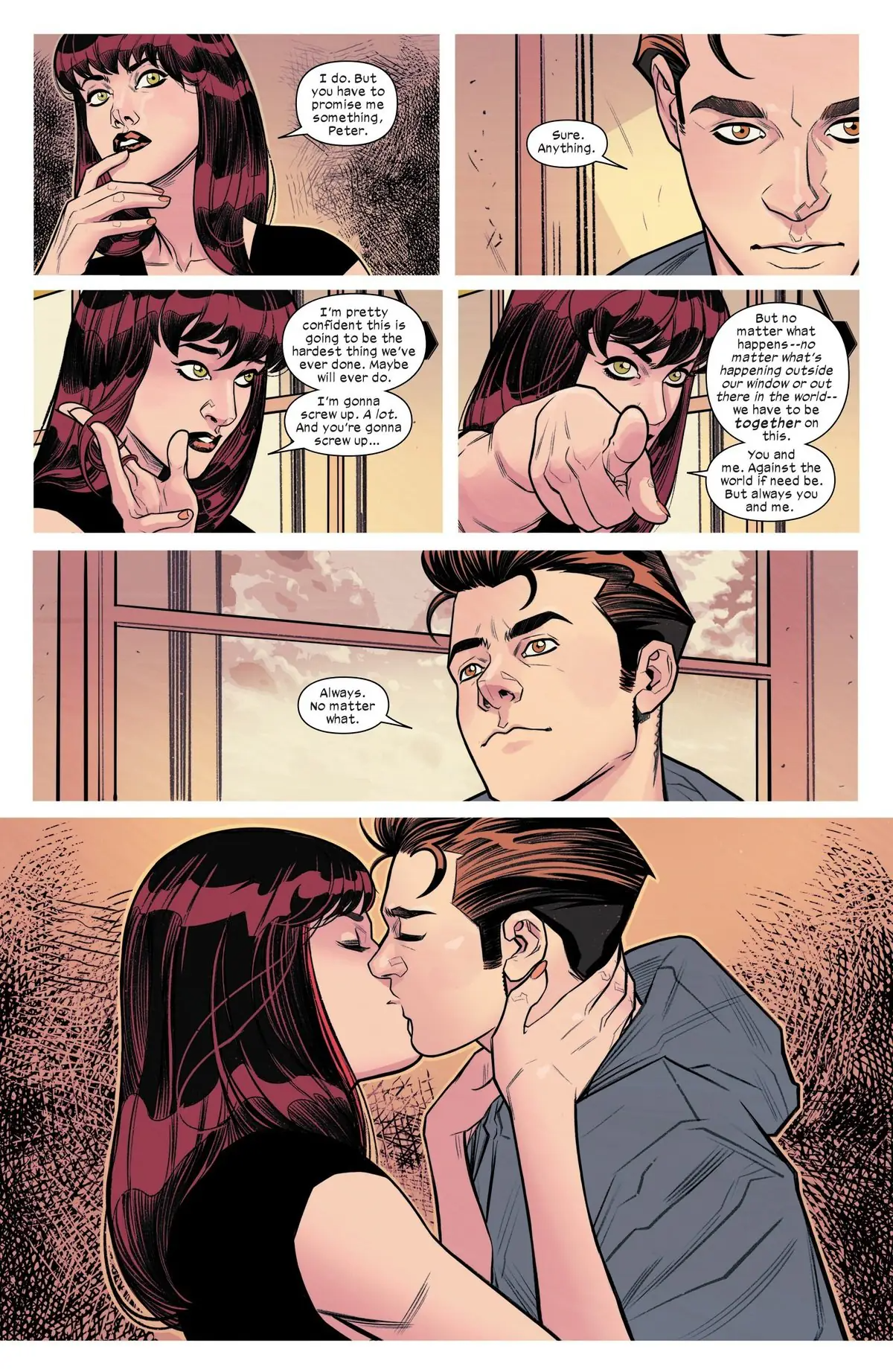
What were the most satisfying and challenging parts of doing this book?
Making this book was the most rewarding part of making this book!
I’ve been a huge Spider-Man fan for as long as I can remember, and being able to work on a project like this—sharing it with a friend, keeping an eye on the creative aspects and the atmosphere, and experiencing the readers’ affection and support—I wouldn’t even know where to start!
What parts of your technique are you hoping to push further next time? What aspects feel like taught you a lot and made you grow as an artist and storyteller?
Another aspect I’d really love to work on is color, so I can have even greater control over the final result and use color as a storytelling tool the way I’d like to. Sooner or later, I’d like to have the chance to create a mini-series or at least a one-shot where I’m also in charge of the colors!
Which one was your favorite cover you’ve done for the book and why? Can you describe your process from inception to final version?
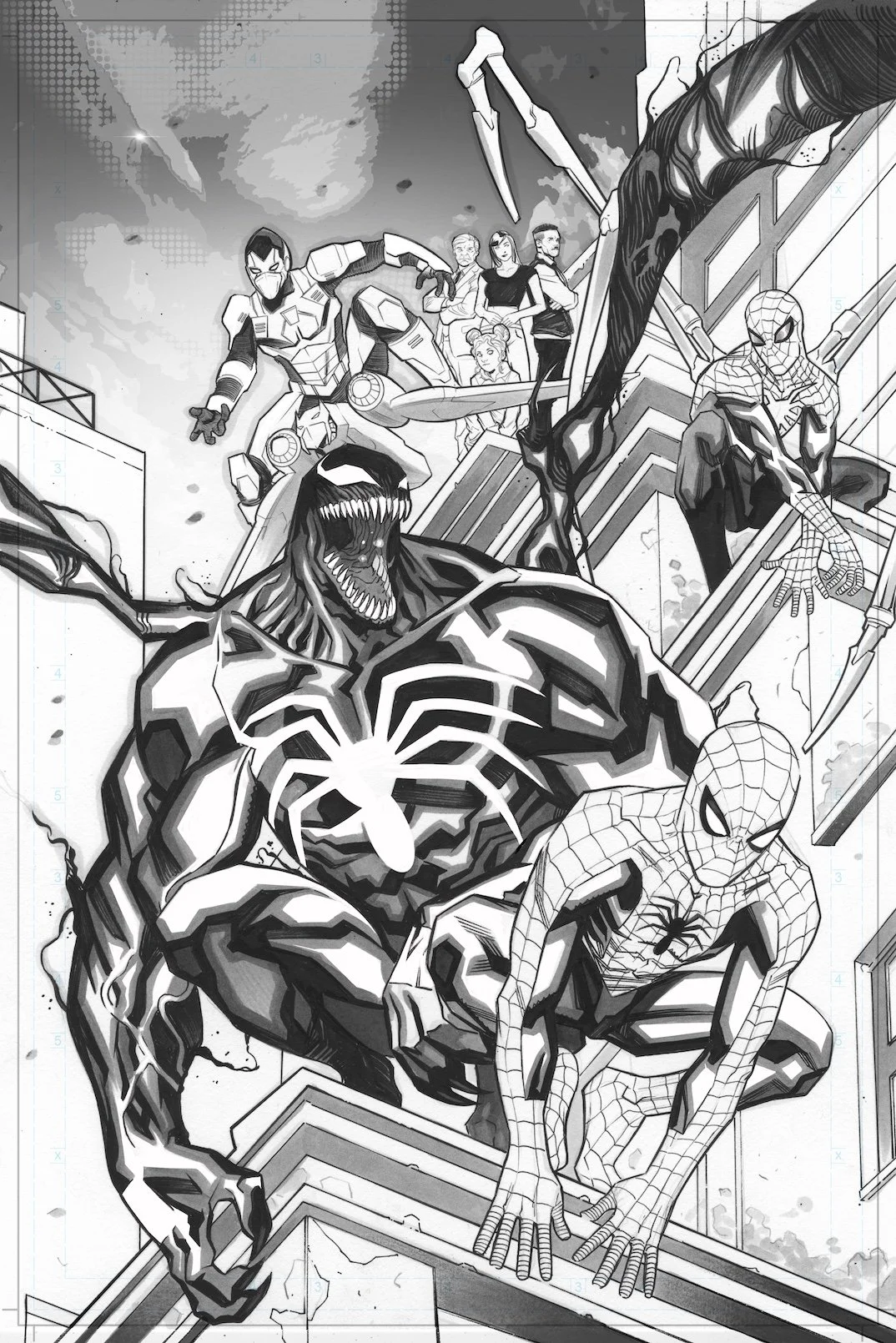
Definitely the Issue 24 variant with all the heroes together! Precisely because I had the chance to draw all the characters at the heart of the series.
The process was the one I’ve always used: 3 layouts to get the editors’ approval; once I had those, I studied the individual poses and their lighting, often using my collection of action figures and Hot Toys for reference; finally, after creating the digital pencil sketch, I printed it on paper, refined it further, inked it, and then added the grayscale tones with Copic markers before sending it to the colorist!
When you get a script how long does it take from layout to finished art to be done? Does it involve editorial feedback and changes?
Actually, it changes every time—it depends on the time available, on your relationship with the editor (who might first need to review the various stages of the work, or who may have already worked with you and gives you more freedom), and on the type of script you have—whether it’s Marvel-style or a more detailed screenplay.
Unfortunately, there’s no single answer to this question because there are too many details involved.
Was there any personal touch that you worked into your art during the run that wasn’t in the script and wanted to add because it means something to you? Do you share your art with your girlfriend for example for feedback or Marco since you mentioned he’s also a good friend of yours? If yes, what were the most helpful critiques you got?
There are so many small details, from the choice of clothing to home decor to restaurant design.
Oh yes, whenever I had doubts, I’d share my work with my girlfriend—who’s a comic book writer here in Italy—or with Marco or my colleagues at the studio, who are extraordinary artists working for Marvel, Boom!, or DC, just to be more confident and sure of my choices.
Which was the best issue you worked on for whatever reason and which was the most difficult?
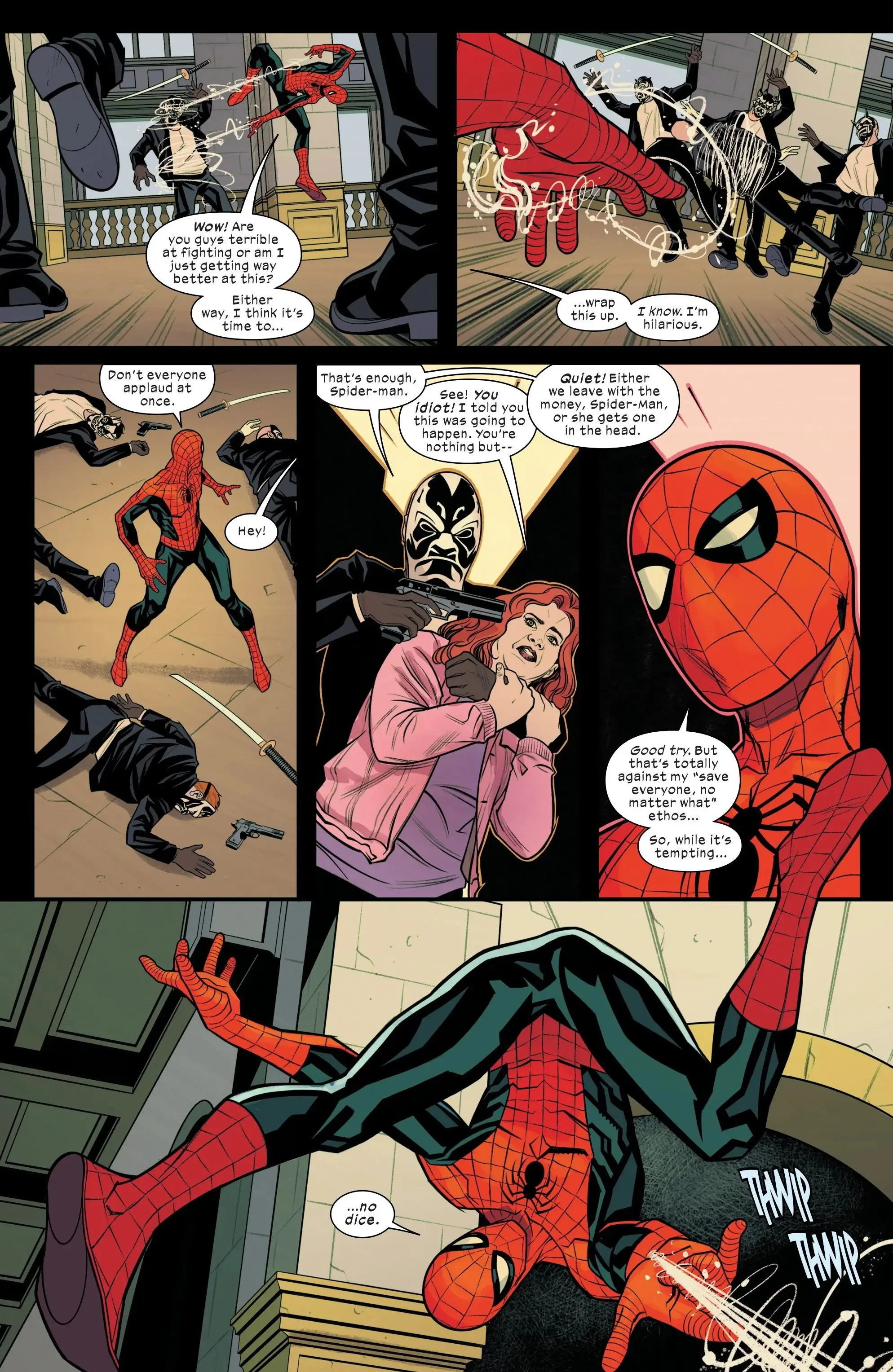
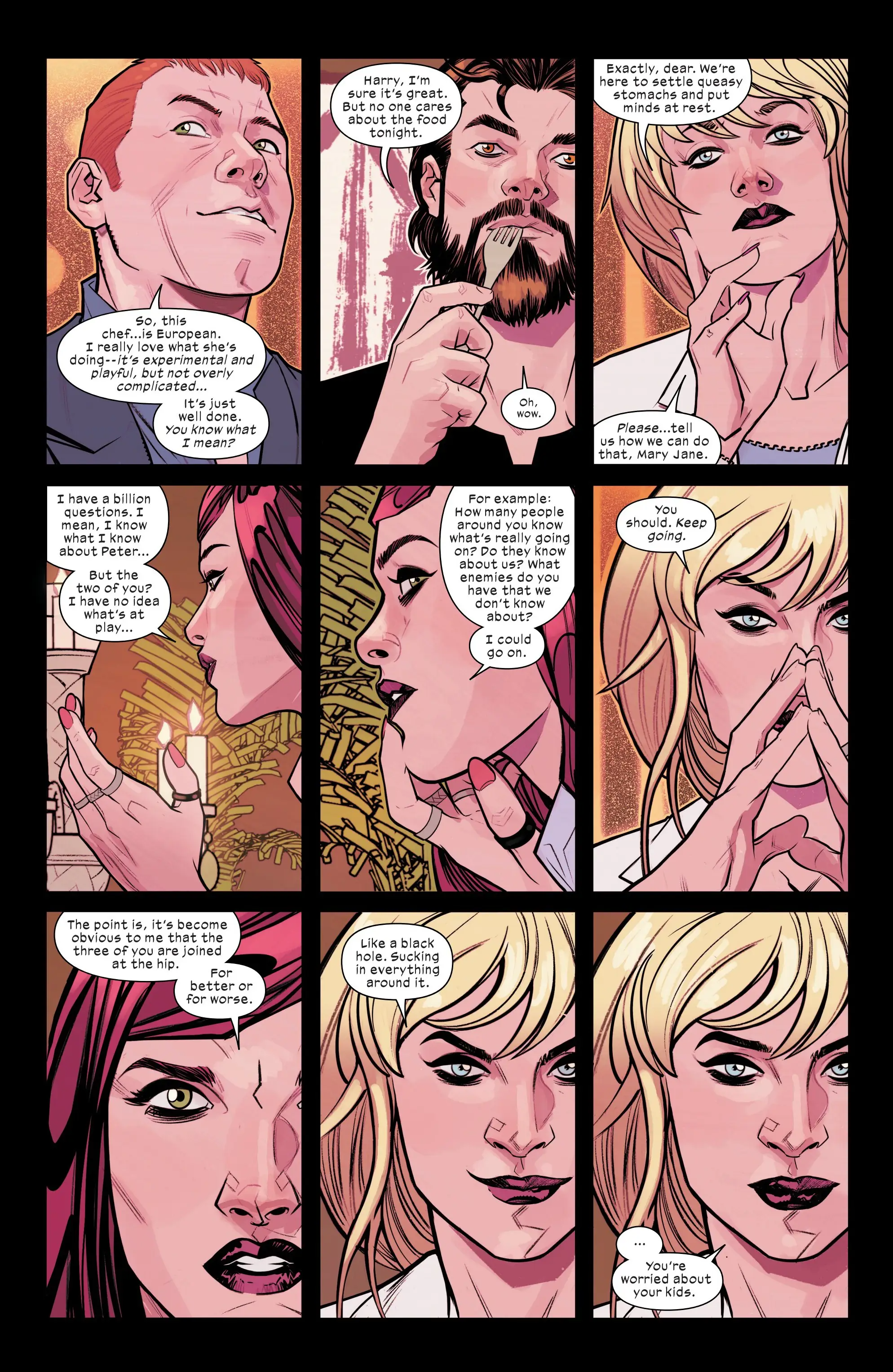
Definitely numbers 11 and 15 were the most fun because I got to draw Spider-Man in action, which is always a lot of fun to do, while the hardest one was number 20, where the two couples meet for dinner at a restaurant, and I was afraid of repeating myself in the shots and visual solutions.
We’d already seen that situation, and I’d drawn it myself, so I was worried I wouldn’t be able to offer a fresh perspective and that I’d bore the reader.
Are there any easter eggs you planted for fun?
There are several, from my girlfriend sitting at the bar reading in issue #5 to Marco and me as bouncers in issue #10, or the aforementioned JR Sr., as well as visual references to Spider-Man cartoons, other movies, and video games.
There are so many, but I’ll leave it to the reader to discover them!
Is there anything you’d like to mention?
Not that I can think of! It was a great adventure, and I’d be happy at any moment to go back to working on that series and continue telling the stories of Peter, MJ, Richard, Harry, and everyone else.
It was probably one of the best chapters of my career, and if I may add one more thing, I’d really like to sincerely thank everyone who supported us, followed us, and stood by us during this crazy two-year ride: you’re the reason I’m here!
Congratulations on your work, I truly mean it when I say I greatly enjoyed it and as an artist learned a lot not just from talking with you but also studying your work. Thank you again for your time and I'm really excited to see what you do next!
You can follow David Messina on X(Twitter) and Instagram.